- vi
- EN
10:36 | 16/04/2019
1) Why are my teeth extracted for orthodontics when they are still good?
Teeth extraction in orthodontics aims to create gaps to move teeth. If there is no gap, the teeth will not be able to move.
A gap is required in orthodontics to move your teeth. If you have an serious overbite or crowding, your doctor needs a lot of gap to arrange your teeth. Thus, your doctor may ask for tooth extraction. Otherwise, the teeth cannot be moved, or they will be exposed in the front.
Tooth extraction provides a relatively large space (about 6-8mm on each side), so it is often prescribed by a doctor in cases which you have large teeth, crowding or serious overbite. Normally, the doctor will pull back the incisors into the gaps of extracted teeth to reduce overbite (overbite) or fully arrange all the incisors to the gaps of extracted teeth (crowding), or pull the snaggled teeth to the extracted teeth position (snaggled teeth), etc. Therefore, the tooth is usually indicated for extraction is the number 4 tooth, after the canine tooth (counting from the central incisor is the number 4 tooth. The central incisor is the number 1 tooth. The lateral incisor is the number 2 tooth. The canine is the number 3 tooth.)
Normally, after orthodontics, the gap will be closed, so the patient does not have to replant the teeth after orthodontic placement on the extracted tooth.
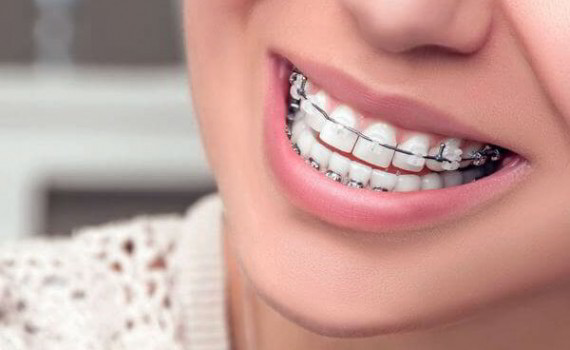
2) What is dental grinding? Why do doctors recommend to grind teeth for orthodontics?
Teeth grinding in orthodontics is a technique that grinds 2 lateral sides of the tooth, making it neat while creating spaces to move teeth.
Normally, doctors can only grind a little bit of each tooth (about 0.3 – 0.5mm), because if you grind a tooth too much, patient will suffer from tooth sensitivity. Therefore, grinding techniques are often applied to many teeth, from 4,6,8 even to 10 front teeth to create enough spaces to move teeth.
In fact, there are cases of triangular incisors, which only touch a small part of the lateral surface, the teeth grinding will be effective. Thus, there are spaces to move the teeth and to close the gingival gap with little grinding of tooth tissue, which almost doesn’t affect teeth.
On the contrary, if your teeth have good interaction between lateral plane surfaces, then when grinding, it will violate many tooth tissues, causing sensitivity, especially for pediatric patients.
Thus, depending on the spaces needed to move the teeth, the doctor will suggest tooth extraction or interstitial grinding. In cases needing so many gaps, it is necessary to do both tooth extraction and interstitial grinding.
Interdental grinding is usually indicated by an orthodontist in cases where it is necessary to have small gaps to move the teeth such as slightly overbite (less pulling back), slightly crowding, or to adjust the bites when two sets of teeth size don’t match each other.
3) What is a wisdom tooth? Why do orthodontists ask me to extract my wisdom teeth after extracting the number 4 tooth for orthodontics?
Wisdom teeth are large internal molars, also known as number 8 teeth, which grow when the patient is 18 years old and their jaws have enough spaces. In the case of patients’ small jaws, there is not enough space, wisdom teeth may not grow, become stuck, or be hidden.
Wisdom teeth are relatively large, equal to that of a large molar tooth (the number 6 and 7 chewed teeth counting from the incisors). Therefore, wisdom teeth often do not have enough room to grow, or if they grow up, they will push the patient’s other teeth, causing crooked teeth or overbite. In fact, some patients feel that their teeth protrude or being crowding than when they were at 16, 17 years old (before wisdom teeth start to grow).
When the wisdom teeth grow, it will push the other teeth forward. Thus, it will reduce the ability to pull back the front teeth to avoid overbite, or lose the space from the extraction of the number 4 tooth to align the teeth, affecting orthodontic results. Therefore, orthodontist will recommend you for wisdom tooth extraction if it harms to the treatment.
Thus, wisdom teeth are only extracted when they grow forward or in case orthodontist maximally pulls back the jaws during the orthodontic treatment process. Wisdom teeth extraction will help prevent bad results.
In cases when the patients go to the orthodontist after the wisdom teeth have fully grown and the jaw is pushed forward a lot, the orthodontic results may be only good to some extent, even if the number 4 teeth are extracted because dental arches have been pushed forward too much.
4) I feel that orthodontics requires so many teeth extraction. Does this affect the health of the teeth and the chewing power of the jaws?
In fact, there is no orthodontist who wants to extract a patient’s teeth, unless absolutely necessary. However, in the long run, a set of teeth having good bite is better than a set of teeth having many teeth but the interaction between them is not good.
The chewing power depends on the tooth surface really interacting with the opposite jaw when chewing. Once you have a snaggled or crooked tooth, those teeth don’t have any chewing contact.
In orthodontic process, orthodontist may pull out you chewing tooth. After that, the crooked tooth (or other misaligned tooth) will be pulled and placed into the “chewing position”. Therefore, chewing power will be recovered after orthodontic treatment.
Note: Treatment methods and results depend on each person’s constitution.
Connect us to receive our news